
New Construction Radon & Radon-Ready Activation
Moved into a new home with a capped radon pipe? We test new homes and activate passive radon-ready systems with a fan when levels call for it, across Greenville, Simpsonville, Greer, Five Forks and Fountain Inn.
Get a Free Quote Call (727) 300-6656New homes can have radon too
It's easy to assume a brand-new house is free of radon. But radon comes from the soil, not the age of the home. A new slab or crawl space sits on the same ground as the house next door, and tighter modern construction can trap more air indoors.
The EPA recommends testing every home, new or old, and fixing at 4 pCi/L or higher. It also suggests considering a fix between 2 and 4.
Greenville County's radon code for new homes
Greenville County is the only county in South Carolina that requires radon control methods in new homes. The requirement comes from the radon appendix of the residential building code, and the code's radon table lists Greenville as the only South Carolina county with high radon potential. In February 2026, the county asked to keep that radon appendix (Appendix BE) in place.
For most new homes, those methods add up to a passive, radon-ready setup:
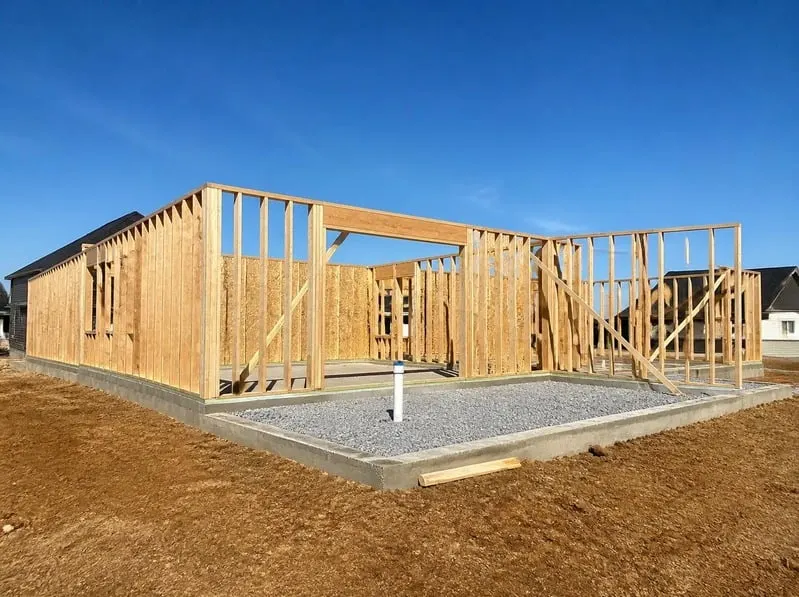
- A gas-permeable layer, such as gravel, under the slab.
- A sealed plastic barrier over that layer, or over the ground in a crawl space.
- A vent pipe running from under the slab or membrane up through the house and out the roof.
- Sealing at major openings, plus a spot reserved for a future fan.
Outside Greenville County, builders aren't required to include these steps, so some new homes have them and many don't.
Passive vs. active: why testing matters
A passive system has no fan. It relies on natural airflow and the stack effect to draw soil gas up the pipe. That helps, but passive systems may not reach the action level alone. Results depend on soil, weather, the home's design and how well the barrier was sealed during construction.
So the plan is simple: test after move-in, and add a fan if needed. Because the pipe is already in place, activating the system is usually much simpler than retrofitting a home that has none.
How we activate a radon-ready system
Test the home
We run a radon test after you've moved in, under normal closed-house conditions.
Locate the pipe
We find the passive pipe, confirm it's connected under the slab or membrane, and check its route through the attic or wall.
Add the fan
We install a radon fan outside the living space, usually in the attic or on the exterior, sized to your home.
Add a manometer and seal
We add a gauge so you can see suction, and seal key openings so the fan works efficiently.
Retest
After the system has run at least 24 hours, we test again so you have a result showing your levels.
Typical cost
Activating an existing radon-ready pipe is often simpler than a full retrofit, so it usually lands toward the lower end of our typical ranges: $900 to $2,500 for slab and basement systems and $1,500 to $3,500 for crawl space systems. A professional short-term radon test starts from about $150. Your final price comes from an on-site look.
See the full table in our radon mitigation cost guide.
Growth areas across the Upstate
The Upstate is building fast. In 2025, Greenville County issued 4,947 new-home permits, Spartanburg County 3,986 and Anderson County 1,493. Simpsonville approved more than 950 new homes in 2022, Five Forks grew from about 8,000 residents in 2000 to more than 17,700 by 2020, and Fountain Inn grew about a third between 2010 and 2020. Greer has climbed past an estimated 50,000 residents.
For builders, we can activate systems on homes that test high. For new owners, we'll test your home and tell you honestly whether a fan is worth adding.
For builders and new homeowners
Builders: when a buyer's post-move-in test comes back high, a quick activation keeps the customer happy. We'll coordinate with your customer care team and send a written post-install result.
Homeowners: check your attic or garage for a labeled PVC pipe that ends at the roof. If you find one, you may have a radon-ready home. Test it, and if the number is high, a fan is usually an easy upgrade.
Already have a fan that isn't working? See radon system repair.
Frequently asked questions
Do new homes in Greenville County need radon systems?
Greenville County is the only South Carolina county that requires radon control methods in new homes, under the radon appendix of its residential code. In practice, that usually means a passive radon-ready setup: a gas-permeable layer, a sealed barrier, and a vent pipe. It doesn't mean every new home has an active fan-powered system installed.
Is a passive radon-ready system enough?
Sometimes, but not always. Passive systems rely on natural airflow and may not bring levels below the action level on their own. The only way to know is to test after you move in. If the result is 4 pCi/L or higher, or you'd like it lower, adding a fan to the existing pipe is usually a straightforward upgrade.
How do you activate a radon-ready pipe?
We confirm the passive pipe is connected under the slab or membrane, check the route, and install a radon fan in the attic or on the exterior, outside the living space. We add a manometer so you can see the system working and seal any key openings. Then we test again to confirm your levels dropped.
Should I test a brand-new home for radon?
Yes. A new foundation and fresh construction don't mean low radon, and the EPA recommends testing every home. Test after you move in, under normal closed-house conditions, and again every couple of years. If your builder installed passive radon-ready piping, a test tells you whether adding a fan is worth it.
Test or activate your new home
Tell us about your home and your builder's radon setup. We usually reply the same day.
Related services and areas we serve
New homes in these fast-growing communities are a big part of the work we see.
Related services
Nearby service areas
See every town we cover on our service areas page.
Know your number. Fix it if it's high.
Free radon mitigation quotes across the Upstate — usually a same-day reply.