
Radon Testing in Greenville & the Upstate
Find out what your home's radon level actually is. We place professional continuous radon monitors in homes across Greenville, Spartanburg, Anderson, Pickens and Oconee counties, with tests from about $150.
Get a Free Quote Call (727) 300-6656Why test for radon in an Upstate home?
Radon is a radioactive gas that comes from uranium breaking down in soil and rock. It has no smell, no color and no taste, so a test is the only way to know how much is inside your house. The EPA estimates radon is the leading cause of lung cancer among non-smokers and the second leading cause overall.
The Upstate gives homeowners good reason to check. Greenville County is the only county in South Carolina that the EPA places in Zone 1, its highest radon potential category. Spartanburg, Anderson, Pickens and Oconee counties are all Zone 2. State program data on initial tests shows averages of 3.4 pCi/L in Greenville County and 5.0 pCi/L in Oconee County, with individual readings far higher.
Averages only tell part of the story. Two homes side by side can test very differently, which is why the EPA recommends testing every home regardless of zone.
Short-term vs. long-term radon tests
There are two basic kinds of radon test, and each has a job.
- Short-term tests run from 48 hours to about 90 days. Most homeowner and real estate tests run two to four days. They give a fast answer and are the standard first step.
- Long-term tests run more than 90 days. Radon rises and falls with weather, season and how you run your HVAC, so a long-term test gives a better read on your year-round average.
If a short-term result comes back high, the usual next step is a second short-term test or a long-term test to confirm before you spend money on a mitigation system. If a result lands between 2 and 4 pCi/L, a long-term test can help you decide whether a system makes sense.
Continuous radon monitors
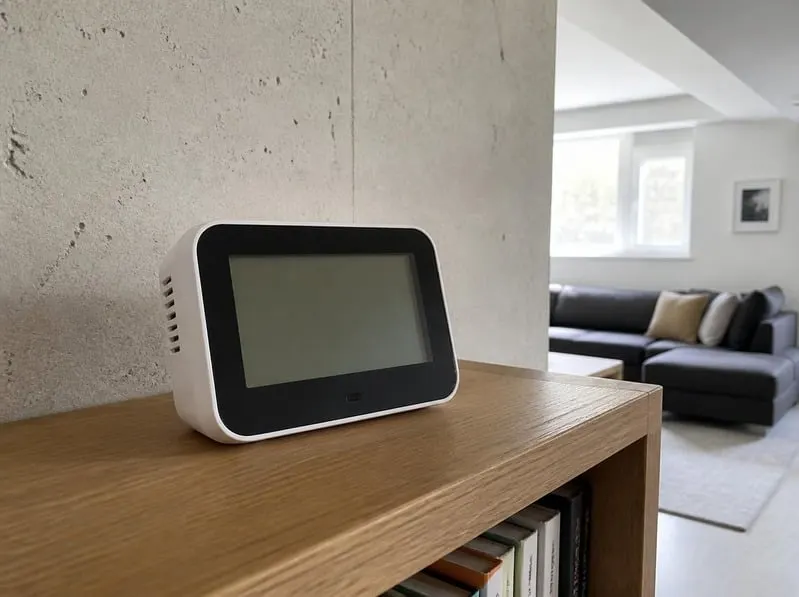
For professional tests we use continuous radon monitors. Instead of a single average, the monitor logs radon levels hour by hour. That makes it easier to spot a reading thrown off by an open window or a moved device, and it gives you a clear report you can hand to a buyer, seller or lender.
How a professional radon test works
Set up closed-house conditions
Starting 12 hours before the test and for the whole test period, keep windows and outside doors closed except for normal coming and going. Run heat or air conditioning as usual, but avoid whole-house fans and fireplaces.
We place the monitor
We put the monitor in the lowest lived-in level of the home, away from drafts, exterior walls, kitchens and bathrooms, at roughly breathing height.
The test runs
Most of our short-term tests run at least 48 hours. You can live in the home normally as long as closed-house conditions hold.
We pick up and report
We collect the monitor and send you a written report with your average level and the hourly data, plus a plain-English explanation of what it means.
What a radon test costs
A professional short-term radon test typically starts from about $150. Homes with more than one foundation area, such as a basement plus a crawl space, may need more than one monitor. We send a clear written price before we schedule anything.
If you'd rather start on your own, the South Carolina Department of Environmental Services offers one free test kit per home while supplies last at des.sc.gov/radon. It's a good first step, and if your kit reads high, we can follow up with a professional test.
For the full list of typical ranges, from tests to mitigation systems, see our radon mitigation cost guide.
Radon testing for Upstate home sales
South Carolina's Residential Property Condition Disclosure Statement, effective June 1, 2023, asks sellers about known radon gas. State law does not require a radon test, so many buyers order one during the due diligence period. Because those windows are short, we schedule real estate tests quickly and deliver reports that agents and both parties can read.
If a test comes back high, our home sale radon mitigation page covers how buyers and sellers usually handle it, and our post-mitigation test gives you a result for the closing file.
What happens after your results
If your home tests below 2 pCi/L, you're in good shape. The EPA still suggests retesting every couple of years and after big changes like finishing a basement or replacing the HVAC system.
If your home tests at or above 4 pCi/L, we'll walk you through the options. Most Upstate homes are fixed with sub-slab depressurization or crawl space radon mitigation, depending on the foundation.
If you're between 2 and 4, we'll give you the facts and let you decide. There's no pressure to buy a system you don't want.
Frequently asked questions
Can I test my home for radon myself?
Yes. A do-it-yourself kit is a fine first step, and South Carolina offers one free test kit per home while supplies last at des.sc.gov/radon. Follow the closed-house instructions closely and mail the kit back on time. A professional test with a continuous monitor adds hour-by-hour data and tamper checks, which matters most for real estate deals and for confirming a mitigation system works.
How long does a radon test take?
A short-term test runs at least 48 hours, and many professional tests run two to four days. Long-term tests run more than 90 days and give a better picture of your year-round average. For a home sale or a quick decision, a short-term test is standard; for a borderline result, a long-term follow-up is often worth the wait.
What radon level means I should fix my home?
The EPA recommends fixing a home at or above 4 picocuries per liter (pCi/L) and suggests considering a fix between 2 and 4 pCi/L. For reference, the EPA puts the average indoor level in U.S. homes around 1.3 pCi/L and outdoor air around 0.4. One elevated short-term result is usually confirmed with a second test before you decide.
How much does a professional radon test cost?
Our typical range for a professional short-term radon test starts from about $150. Price can vary with the number of foundation areas that need a monitor and whether the test is tied to a real estate deadline. We give you a clear written price before we schedule. See our radon mitigation cost guide for the full range of typical prices.
Should I test even if my neighbor's home tested low?
Yes. Radon levels can vary a lot from one house to the next, even on the same street, because soil, foundation type and how a home is sealed all play a part. The EPA recommends testing every home regardless of its radon zone. Your own test result is the only number that tells you about your home.
Book a radon test
Tell us about your home and your timeline. We usually reply the same day.
Related services and areas we serve
Testing is the first step. If your number is high, these are the services that bring it down.
Related services
Nearby service areas
See every town we cover on our service areas page.
Know your number. Fix it if it's high.
Free radon mitigation quotes across the Upstate — usually a same-day reply.