
Radon in Well Water: Testing & Treatment
If your Upstate home runs on a private well, radon can come in through your water as well as your foundation. We arrange water testing and install treatment systems across Greenville, Spartanburg, Anderson, Pickens and Oconee counties.
Get a Free Quote Call (727) 300-6656How radon gets into well water
Radon forms in soil and rock as uranium breaks down. Groundwater moving through that rock can pick it up and carry it, dissolved, into your well. When the water comes out of a faucet or showerhead, agitation and warmth release much of that radon into the air you breathe.
Showers, washing machines and dishwashers are the biggest release points. So even if your foundation is well sealed or already has a radon system, a private well can add radon to your indoor air.
Homes on public water are usually less of a concern, especially where the supply comes from lakes and rivers. This page is for homeowners on private wells.
Test the water separately
A standard radon air test measures the total radon in your indoor air. It can't tell you how much came from your water versus the soil under the house. To know whether your well is part of the problem, the water needs its own test.
- We arrange a water radon test, with the sample collected from a tap and sent to a laboratory.
- We pair it with an air test if you don't already have a recent result.
- We read both results with you, so you know whether to treat the air, the water, or both.
Many homeowners on wells find their indoor air problem is mostly from the soil, and a foundation system is the fix. Others find the water is a real contributor. Testing tells you which, before you spend money.
Treatment options: aeration vs. carbon
Aeration systems
An aeration system treats water where it enters your home. It bubbles or sprays the water inside a tank so the radon comes out of the water, then a small fan vents that radon outdoors above the roofline. Treated water is then pumped into your plumbing. Aeration is typical for higher water radon levels because it removes radon without building it up in the equipment.
Granular activated carbon (GAC)
A GAC system runs water through a tank of activated carbon that traps radon. It's simpler and quieter, and can suit some lower-level situations. Because radon and its decay products collect in the carbon, the tank needs careful placement, and media changes need proper handling.
We'll recommend the type of system that fits your water result, water use and space, and explain the tradeoffs in plain terms.
Our process for well water radon
Test
We arrange a water radon test and, if needed, an air test.
Review results
We go over both numbers with you and explain whether the water, the soil or both need attention.
Site visit
We look at your well equipment, pressure tank, plumbing, space and power to plan the system.
Written quote
You get a clear written quote with the system type and install details.
Install and retest
We install the system, then retest the water so you can see the result.
Typical cost
Our typical range for a radon-in-water system on a private well is $1,200 to $5,000. The water radon level, your household's water use and flow rate, the type of system and how much plumbing work it takes all affect the price. If your indoor air also needs a foundation system, we'll price that separately.
All prices are estimates until we see your setup. For every typical range we work with, see our radon mitigation cost guide.
Private wells in the Upstate
The Upstate sits along the Blue Ridge foothills and the Piedmont, and plenty of homes outside city water lines, from the foothills to the lakes, still rely on private wells. Greenville County is the only South Carolina county in EPA Zone 1, and the other Upstate counties are Zone 2, so radon in soil is a known issue here.
Radon in well water varies from one well to the next, so the only way to know about yours is to test it. If you're on a well and your indoor air test is high, or you simply want peace of mind, a water test is a sensible next step.
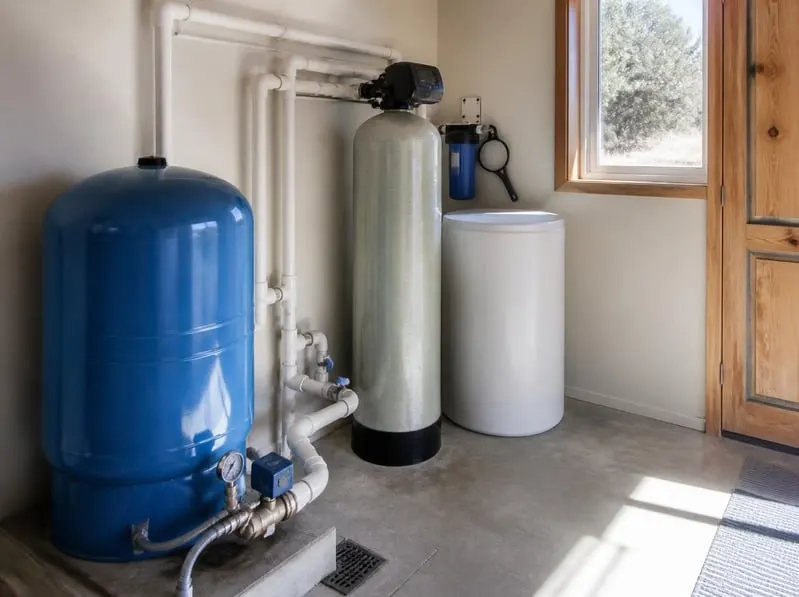
Air and water, handled together
Because radon can come from both the ground and the well, it helps to have one team look at the whole picture. We'll make sure you aren't paying to treat water when the soil is the real source, or the other way around.
For the air side, see sub-slab depressurization and crawl space radon mitigation. To start with a number, book radon testing.
Frequently asked questions
Can radon be in well water?
Yes. Radon can dissolve into groundwater as it moves through soil and rock, so homes on private wells can have radon in their water. Public water systems that draw from surface water generally carry far less. When well water is used for showers, laundry or dishes, some of that radon escapes into the air inside the home.
Does a regular air radon test catch radon from my well?
Not on its own. An air test measures total radon in your indoor air, which includes what comes from water use, but it doesn't tell you how much came from the water versus the soil. A separate water test, using a sample collected from a tap, shows how much radon is in the water itself. We arrange that test for you.
What is the difference between aeration and carbon filtration?
Aeration systems bubble or spray the water so radon leaves it, then vent that radon outdoors. Granular activated carbon (GAC) filters trap radon in a carbon bed. Aeration is typical for higher radon levels. Carbon can fit some lower-level cases but holds radioactivity in the filter, so it needs careful placement and handling. We'll explain which fits your result.
How much does a radon-in-water system cost?
Our typical range for a radon-in-water system on a private well is $1,200 to $5,000. The price depends on the water radon level, your water use and flow rate, the type of system, and where it fits in your plumbing. We arrange a water test first, then give you a clear written quote after seeing your setup.
Ask about well water radon
Tell us about your well and any test results. We usually reply the same day.
Related services and areas we serve
Well water treatment pairs naturally with air testing and foundation systems.
Related services
Nearby service areas
See every town we cover on our service areas page.
Know your number. Fix it if it's high.
Free radon mitigation quotes across the Upstate — usually a same-day reply.